Wednesday, July 22, 2026

How to sell my farm raised beef or pork near me

First and foremost, beef and pork can only be sold if they have been inspected by either the USDA or the State. It's important to note that not all states have a meat inspection program in place. Therefore, you’ll want to start by checking the regulations specific to your state to ensure compliance. Once you’ve confirmed that your meat is properly inspected and meets all health standards, you can explore various avenues for selling your farm-raised products.

Consider local farmers' markets as a platform to reach customers who appreciate fresh, locally-sourced meat. These markets provide an excellent opportunity to connect directly with consumers and share the story of your farm. Another option is to partner with local grocery stores or butcher shops that are interested in offering high-quality, locally-produced meat to their customers.

Additionally, creating an online presence can expand your reach. A website or social media page dedicated to your farm can attract customers who value transparency and want to learn about the origins of their food. Be sure to highlight the benefits of your farm-raised meat, such as ethical farming practices and superior taste.

Finally, consider joining local agricultural cooperatives or networks. These organizations can offer support, resources, and potential customer bases that can help you successfully market your products.

There is a workaround or loophole regarding USDA or state-inspected meat known as Custom Slaughter Processing.

I've come across stories of individuals exploring alternative loopholes, such as selling the animal directly to the consumer and offering assistance with processing it on their farm. However, that's illegal. The proper custom processing method involves the farmer selling the animal, after which the new owner has it processed by a licensed processor who is regularly inspected. A Custom Exempt Processor can handle processing on the same farm where the animal was raised, regardless of ownership. This can also be managed through shares, such as ½ cow or ¼ cow, allowing multiple owners to share the same animal, commonly referred to as cow shares or pork shares.

Animal shares whether it's beef or pork is the easiest way to market and sell meat.

By offering shares, you can cater to customers looking for bulk purchases while ensuring that your animals are processed legally and ethically. This method also allows consumers to feel more connected to their food source, as they become part of a community that supports local farming.

When implementing an animal share program, it’s important to communicate clearly with your customers about how the process works. Provide detailed information on the benefits they’ll receive, such as cost savings and the ability to choose specific cuts of meat. Transparency about the timeline for processing and delivery is also crucial to maintaining trust and satisfaction.

Moreover, organizing educational events or farm tours can enhance your relationship with your customers, providing them with insights into sustainable farming practices and the care that goes into raising healthy animals. These experiences not only boost customer loyalty but also create a deeper appreciation for the quality of your products.

In summary, animal shares offer a unique and effective way to market your farm-raised meat, fostering a supportive community around your farm and ensuring that both you and your customers benefit from the arrangement.

Mobile Processing: A Significant Advantage for Your Customers


When customers purchase meat directly from the farm, they want to know its origins, what it contains, and how the animals were raised. By hosting a shared processing day on your farm, customers gain firsthand knowledge of how their meat was handled and cared for. This transparency ensures that they receive their meat with same-day service. Can you confidently say that when an animal is sent to a meat processor, customers will wait 30 to 90 days to receive their product?

If you're eager to learn more about organizing a beef or pork share event, please reach out to me using the contact form provided. I’m more than happy to share my knowledge with you. If you're based in Texas, I would love to be the processor for your event. Even if you're outside of Texas, I can assist with planning, pricing considerations based on the animal, and selling by meat weight per pound. We can also discuss cutouts and inform your customers about what to expect. At Cearball Home Slaughter, we have been doing this for six years and are excited to share our experience with you to ensure everything runs as smoothly as possible.

Tuesday, July 21, 2026

Grass fed vs grain fed beef, which one is actually better for you to eat

Let’s get straight to the point: which option is better? When it comes to grocery store choices, the main difference between grass-fed and grain-finished beef lies in their characteristics. Grass-fed beef tends to be leaner, lower in calories, and has a chewier texture with more flavor. On the other hand, grain-finished beef is juicier and more tender. Nutritionally, both types are quite similar.

However, if you’re looking for a distinct difference, consider purchasing directly from a farm that offers slow grain-finished beef. Why? Because large packers and feedlots focus on producing beef that grows quickly, often sacrificing nutritional quality. A local farmer will typically take the time to slow down the process, allowing more nutrients to develop in the beef. This approach not only enhances the beef’s flavor and nutritional profile but also supports sustainable farming practices. By buying from smaller, local farms, you're not only making a choice that benefits your health but also one that supports the community and the environment.

It is kind of a false concept of considering the ethical aspect of grass-fed beef generally coming from animals that have had better living conditions. They graze in open pastures, which can lead to a happier and healthier life compared to those in confined feedlots. This aspect can be an important consideration for those who value animal welfare.

Because the simple fact is that on a local farm, cattle can be raised with the same ethical aspects. It is just getting grain to eat along with all these other farm benefits. Maybe we should call this pasture-raised grain-finished beef or maybe simply farm-raised grain-finished beef. This way, consumers can enjoy the best of both worlds: the ethical treatment of animals and the delicious, tender qualities of grain-finished beef. By supporting these local farms, you're not only ensuring high-quality meat on your table but also contributing to a more sustainable and humane agricultural system. So next time you're at the market or considering your beef options, remember the impact of your choice and the potential to support practices that align with both taste and ethics.

It’s great to consider the ethics and know that the beef you're eating came from a cow that lived a great life on the farm, but the true benefit here is healthier beef. Off-the-farm beef is slowing the process down by packing in the nutrition in every bite. It’s going back to the way beef was raised 50 to 60 years ago, back when an 8 to 10 oz steak supplied the nutrition you needed and didn't leave you craving 16 to 18 oz to meet your nutritional needs. Of course, you're still hungry only eating 8 oz from the supermarket because you only got a taste of the nutrition you need, so you eat that 16 to 18 oz to get the nutrition, but you now have all those extra calories just to get there. By choosing high-quality, farm-raised beef, you're not only indulging in a more satisfying meal but also embracing a lifestyle that values quality over quantity. This shift hearkens back to a time when food was less about convenience and more about nourishment, when each bite was rich with the flavors and nutrients nature intended.

Moreover, this approach fosters a deeper connection to the food we consume. Knowing the origins of your meal and the care that went into producing it can transform a simple dinner into a meaningful experience. It's about savoring the journey from pasture to plate and appreciating the dedication of those who prioritize sustainable and ethical practices.

So, the next time you plan your meals, consider seeking out local farms or farmers' markets. Engage with the farmers, learn about their processes, and support their efforts to provide wholesome, responsibly-raised beef. In doing so, you're not just making a healthier choice for yourself; you're also championing a movement towards a more conscientious and sustainable food system.

Tuesday, February 14, 2023

How do you skin wild hogs?


People "How do you skin wild hogs?"

Us "With a sharp knife"

So I have been doing research around the internet and watching some video footage of others' attempts. I'm not writing this post to criticize others, in fact I'm  glad to see others out there skinning pigs. Wild pigs are wonderful to eat and can make many tasty meals. But I have found several key issues or common techniques that could be done better.

Field Dressing or Gutting a Wild Pig 
  Don't. It is not only easier skinning the pigs before gutting but more sanitary. Wild pigs have the unlikely possibility of  carrying brucellosis which will be greatly reduced with proper skinning.  The safest method we have found is to leave the pig ungutted hanging and then remove the hide. Remove the front legs. After that start the gut removal slowly from the top down so everything comes out in a controlled manner. 

Using the "X" Belly Skin Cuts to Start
  This method is so common. In fact, it was the method my father taught me. But there is an easier way, the "Y" method. While hanging, cut a Y down the hind legs and down the middle of the pig. Skin from the top down and then when you're working the belly your knife naturally falls in the right position to skin the front legs making the job so much easier. 

Removal of Head Last
  It is so much easier to remove the head first by slightly raising the head adding weight with the rest of the body. Let gravity be your friend and help pull the head away as you cut with your knife. Just a tip: this actually works on all animals. 

Removable of Legs and Ribs with a Saw
  The more sawing you do the more damage you do to your ice chest and packaging. Sharp bones can go through more than you think. Ribs can easily be done with a clever or hatchet. Legs can be removed at the joints. It is a difficult skill to master, but worth the effort to learn. 

We have a video available that teaches all these techniques, methods, and more that make pig skinning as quickly and easily as possible.

Monday, February 13, 2023

The best caliber of rifle for the knocking down pigs


  So I think we finally found the perfect caliber for knocking down pigs.  A great rifle for knocking them unconscious so then we can go ahead and cut the jugular, opening the throat to bleed out before we process.  I will actually call this an upgrade, because prior to this we were using the 22 rifle which didn't work as well as we had hoped or anticipated. So we decided to step up with a higher velocity rifle.

  The 17 HMR.  The particular one that we upgraded to was the Ruger American and so far I have been very impressed.  With mobile slaughter all of our shots are extremely close up, the livestock are in a small area of  confinement decreasing the chances of missing.  So it was a little tricky to adjust the sites to compensate for this short range.

  What I did was take the iron sights that were on the Ruger American which have the Ruger butterfly system they have been using for years and we actually flipped it around.  There is a set of two screws of the iron sights and I flipped it over to the other side.  This way it operates as a standard iron sight gun instead of the Ruger factory set up. 

 Most of the time we only shoot within two three feet for the animal, but we definitely need to know exactly where that bullet is going. With this new Ruger Rim Fire American 17 HMR we have enough velocity to get a really good knockdown and we're placing the rounds right on in the target zone. Which is always in the forehead right above the eyes.  This is a difficult place to shoot especially if the pig is moving its head around, but this placement is ideal to have the least amount of damage done to the meat. 

  This rifle did come with an adjustable trigger pull from 5 lbs to 3 lbs making the adjustment down to 3 lbs has really helped to make a quick shot on the moving target. Now of course this head shot placement during longer range hunting will rarely present itself for those out hunting  wild hogs, but I still think this would be a great caliber for hunting.

  Shot placement is going to be very important during hunting, because you are not going to get a bunch of long range knock down with this caliber.  With that all being said I think the 17 HMR would be an excellent caliber for kids just starting to hunt, because it has a powerful enough long range knock down with no kick. I think a BB gun has more kick than this thing. 

  If you do happen to get one of these rifles out to the field for pig hunting and are successful in bagging you a pig 🐗 to place in the freezer. Give our pig skinning video a watch to learn our tips and tricks making skinning a pig easier and manageable by oneself.  It will also teach you the final cuts that you will find in the store like Boston butts, pork chops, and ribs all without the use of any high dollar equipment. A high place to hang it and a sharp knife  🔪 is all you need. 


  In our mobile Slaughter unit this has definitely become our go-to rifle and an upgrade that we much appreciate. 


Widpigs and wilddigs hunting out of ranches near  gonzalespighunts


Sunday, February 12, 2023

Replacing the sink in a mobile slaughter unit

  Today we need to replace the sink for the mobile slaughter unit. The reason why we are replacing the sink on the mobile unit is, because we had to replace the floor. There was little bit of rot that had occurred underneath our division wall that separates between the back half of the unit where all the slaughtering is done and the front part where all of our meat processing happens.

  The front half of the mobile unit didn't really have that much rot on the floor as the back half which is understandable. The back half is where the skinning and gutting of all the calves, pigs, and goats so naturally it gets the soaking day after day washing out all the gunk. The front stays relatively clean where just the final cuts of steaks, chops, are produced and everything is packaged up. So last year, we replaced the floor in the back half and so glad we did with all the mobile slaughtering we did. This year was the front half's turn to get replaced. 

  We took last week off due to the weather and had to do some rescheduling. Now we have about 3 weeks of catching up.  So we're going to be on the road a lot in the next 3 weeks with cows, pigs, and  I think we even have a few sheep scheduled on the books. We need to get this sink back in so we can get the unit back in working condition. 

  During this latest maintenance break down, there was one improvement that I'm so happy that we got done. That was rerouting the trailing in the inside of the unit instead of under the trailer frame.  We were continuing having an issue with tearing out the wires because the wires ran underneath the trailer. Every weekend, I was repairing those darn trailer lights. It is exciting to think that now this issues should be repaired for good.  

  The final thing we need to do before we are ready to roll is to fill the water tanks that had to be reinstalled after the floor upgrade. Our mobile slaughter unit is fully self-sufficient with everything we need to roll up on location and get right to work slaughtering and processing livestock all over the state of Texas. She is all put back together now and we're going to hit the ground running. There is hard week of work in front of us, but we're looking forward to it.  


Friday, December 30, 2022

Texas Viking Fest


We had wonderful time at Texas Viking Festival Yule Celebration this year. I got to pick up some new armor and watched some wonderful bagpipe performances. The Scottish Highland games were amazing, the kilted athletes did not disappoint with their contest of strength. The full contact knight fights were just brutal. So much fun. And the mead so much mead, Skol. 


Monday, November 7, 2022

Austin Area Grass Finished Beef Cooking Class

Now offering a grass finished beef cooking class in the Austin area. This can be a one-on-one cooking class or up to eight people. We come to you and teach this  grass finished beef cooking  bringing everything needed to demonstrate the basic cooking techniques for maximizing flavor and tenderness of grass finished beef. 

Normally this class will take between 2 to 3 hours depending on the number of people attending covering slow cooking, grilling, pan frying, stir fry, skillet cooking of roast, steaks, and ground grass finished beef.

We can customize the class for dietary options or restrictions such as low carb, keto, paleo, and carnivore. Just let us know when scheduling what area of interest you have and we can select  recipes that focus on that area. Also let us know if you have a dish or food item that interests you the most like burgers, tacos or spaghetti. We usually can make spin-offs recipes for these items. 

You can use the contact form below to reach out to us or give us a call at 361-772-2628

Thursday, May 21, 2020

Trump suggest limiting beef imports but what about MCOOL


Why are we not seeing more media coverage about MCOOL?

 I don't know why with President Trump making headlines about not importing beef. The newspapers and other news outlets are not covering the Mandatory Country of Origin Labeling issue.

The American consumer deserves the right to know if the beef their eating was born, raised, and processed in USA.

The American rancher deserves the right to have their USA produced ground beef without foreign beef mixed in on groceries stores shelves.

The petition at www.demandusabeef.com   to reinstate MCOOL has over 380,000 signatures in less than a month. Signed by both cattle producers and consumers alike.

I am unsure if you can trust what the NCBA (National Cattlemans Beef Association) has to say about MCOOL, they dont speak for cattle ranchers or consumers. They are obligated to  represent the major packers members of their organization who benefit from not having mandatory label on beef. 

This is causing a quickly growing conflict within the NBCA between packers who want to buy cattle as cheap as possible and cattle ranchers who want a fair price for their cattle.

Tuesday, April 28, 2020

What does MCOOL mean to this cattle rancher

What does MCOOL (Mandatory Country of Origin Labeling) mean for me or how does MCOOL effect me?

Before I get into MCOOL, I should give you a bit of background about myself. I grew up Texas around cattle, my father had a diary when I was a kid. My Grandparents and their parents raised cattle and I'm still here running the ranch.

I am cow/calf producer what most people think of when you say cattle rancher. Basically I have a herd of moma cows with few bulls and they produce calves. I then sell the calves around 7 to 9 months old. Every year I get new crop of calves from the mommas. 

I sell to cattle to backgrounders or feeders through the use of sale barns. These backgrounders will continue to raise the calves until there ready to be harvested or raised up to be momma cows. Once sold I don't have any control of what happens to them. 

So, how does MCOOL effect me? Maybe I should be asking is how does imported cattle effect me?

First without mandatory labeling, packers are passing off beef from outside the US by tricky labeling. Maybe not tricky more like just dishonest. Why wouldn't that make someone upset? To have a product passed off as yours when it's not. 

It also overall cheapens my product. Bringing in cheap imports, lowers the quality of beef here in our stores. These aren't savings they passing on to the consumer. Not at all.  In the last few years the price of meat at the store has increases while cattle prices  have dropped. 

Lastly, I really dont like the idea of depending on forgein companies to produce our food supply. We have most of pharmaceuticals made outside the US now. This is putting many of our most important items in the hands our countries.

Sign the Petition to Support MCOOL 
Click Here

Sunday, April 26, 2020

Does MCOOL have the Hotest Facebook Group Trending

So cattle men and women are scratching their heads asking "Does MCOOL have the hotest Facebook group trending?" (Demand USA Beef)

"What's MCOOL ?" You ask.  It stands for Mandatory Country of Origin labeling, simple really like "Product of the USA"  I bet you thought we already had that. Well on most products we do but not all. 

You might have seen "Processed in the USA"  on beef, so that means it came from America right?

NO. That only means it was cut up here. 

It's hard to believe that some packers would buy cattle from outside the US and try to pass it for America beef. 

Why not when you can buy a cheaper product and pass it off for a better one. Amercia beef leads the world in quality and taste of beef. Why, because here we have the resources and grain supply along the ability to store and transport products in all conditions. Sorry but others just don't have the development or  infrastructure America does.


So how did MCOOL get a Facebook group to grow so fast. Almost 3000 members in less than 10 hours?

Funny thing, I don't think it was intentional. I think it just naturally happened. A few ranchers started a petition last week to support MCOOL then one started a Facebook group and invited some folks and they invited some folks so on and so on.

The pure force behind it, is that people not only want to know where the food is coming from but they also don't want to depend on countries outside the USA to produce it.

I was one of the first people to join and invited many others to join as well. It was amazing how many and how fast people joined up. Thank you. It is an important issue to me and I hope we can get this labeling corrected soon.

236 Shares and 50 Likes under 10 Hours

Sign the Petition by Clicking Here

Demand USA Beef Facebook Group

Sunday, December 17, 2017

Quite Still of Winter's Day

Today was so still, it was as if time had stopped. I never seen a day where there was no wind. The pond was so clear without a ripple or wave in sight the reflection was stunning. Crystal clear water was dreamlike so much that I had trouble believing what my eyes were seeing.   Hauntingly quite with not a chirp from even a crow. A day like no other.  


December 2017 Snow


Friday, December 15, 2017

Texas Ranching in the Fall

The haunting  song the post oaks sang today as the wind of fresh norther blew on tree tops. Fall was at it's best, how grateful am I to see it's wonder. In woods on the land with cattle.

I know that only a few are chosen to get to feel life this way, God has looked down on me with great favor.  The sound of the leaves rustling at my boots and the smell of dirt still damp from last weeks snow. The creak and whine of those oaks as they swayed. 

Thursday, November 30, 2017

I liked to dance and she didn't like that


I liked to dance and she didn't like that

I wanted to spend time with my family and she didn't like that

I wanted to travel and she didn't like that

I wanted kids and she didn't like that

I wanted her to stay and love her anyway

 and she didn't like that


I guess that is about as close to irreconcilable differences you can get, so after fifteen years and life of growing up together we shall now part ways. Was a many of growing pains along the way but that is life. There are no fairy tale ending or happy ever afters. That's why they call them fairy tales because it's not real life. 

Not that we couldn't  have had a happy married life, but should have prepared more for problems that would come along the way. We should have shared the load of solving problems. Her problems should have been mine and mine hers.  

Tuesday, November 28, 2017

With a fairy, hand in hand


“Come away, O human child!
To the waters and the wild
With a fairy, hand in hand,
For the world's more full of weeping
 than you can understand.”  - WB Yates 


I reached out and took the fairy's hand and into the wild we went. What wonders did we see behind most every tree. My soul felt renewed and my mind dreamed larger than ever before. It was the happiest I had ever been. Then the fairy let go of my hand. 

The wild of the woods lost it's light and fear set in my mind for now I was alone. The fairy is far gone from sight. I am left to find my way. But darkness will come before the morning light.  I can not blame the fairy for I am the one that took her hand. I am no human child and the wild is where I feel free. 

I know the fairy's only purpose was to lead me where I need to be. 


*The thoughts I had after reading the "The Stolen Child" by WB Yates and wife filing for divorce.  


Monday, October 23, 2017

Calf with Watery Poop

Calf scours that awful nasty watery poop that all too many calves get. One of the leading causes of death in calves under 30 days old.

Causes

Bacteria infection like E coli
Virus infection like Rotovirus

Myths

Decreasing the amount of milk replacer powder when mixing a bottle decrease the chance of scours.

Allowing the calf to eat hay in the first 30 days increases scours.

Bottle feeding plain water to a calf after a milk replacer feeding will help prevent scours.

Feeding plain water to a scouring calf helps with dehydration.

Not only are these not true but can actually help to promote scours.

Treatment

There are hundreds of products on the market for treating calves with watery poop. Mainly because scours is so hard to cure. The success of treatment depends on amount of damage the calf has in the gut. Once a major amount of scar tissue develops the gut it just can not  absorb enough nutrition for the calf.
I have had success with the following. It first starts with giving the calf antibiotics and then feeding a alternative to milk or milk replacer for two days while not allowing the calf any water.

Sunday, October 22, 2017

Why is my calf pooping blood

My bottle calf is pooping blood

Having a calf that is spotting blood or having blood in the stool or poop is common. Does not mean that you should not be concerned.

What is causing the bloody poop in the calf

It has damage in the lower intestines by either parasites or bacteria. Understanding which one is causing the problem is important to how you would want to treat the calf and repair the intestines.

Age of calf as a determining factor

Under calves under 250 pounds are less likely to have coccidia (parasites) the blood in the poop is caused by bacteria. 

In newborn to under three weeks old, it will be caused by bacteria infection damage.

Eight to nine months old the calf most likely has bloody discharge from coccidia. 

Treatment of bloody poop in calves 

For older calves with coccidia there is a product called Corid that is very effective in treatment.

For those calves under three weeks old a simple over the counter antibiotic will restore the intestines by killing the bacteria. 

For calves older than three weeks with bacteria infection especially with scours, I have found using antibiotics with scour treatment to be effective in treating the calves.


Related Post:


Why does my calf poop stink really bad?

My calf's poop stinks really bad 

I am not saying that calf poop normal smells good, but there are those times when it really smells bad. Like something died. This is actually a very serious condition. Rancid smelling poop in calf is an indication that it is not digesting it's intake well.

Most of the time you will notice this in bottle calves, and a few novice with bottle calves will think it has something to do with type or brand of milk replacer. Somehow the milk replacer is not agreeing with the calf's stomach. It is not true. Something is going on.  Attempting to change or go to a different brand of milk replacer won't help the problem.

Now feeding milk replacer does have something to do with causing the calf poop to smell horrible and a factor in  treating the problem. You want to get this corrected right away. Poor nutritional absorption in calf will cause weakness and the organs to start shutting down quickly in a calf. Also weaken the immune system make the calf susceptible to a deadly rapid bacterial growth causing sudden death. Example: Blackleg

What is causing the poop is smell so bad

The calf's intestines are infected by a bacteria causing damage and poor nutritional absorption. E coli is common but also one of many bacteria that could be the problem.

How do I get my calf's intestines healthy again 

Active charcoal or charcoal can help in most cases. But the problem is if you administer antibiotics you going to low the effectiveness of the antibiotics.

I use a two step treatment method that has worked extremely well for my calves. The first part is to give antibiotics and the next is to substitute milk replacer feeding with a different product for a few days. It is also important not to allow them water during this treatment time.

In my guidelines for raising and caring for calves the treatment use for scouring calves is the exact same treatment.  


Related Post:
Why does my calf poop stink really bad 
Calf with watery poop
Bottle feeding a calf milk replacer


Sunday, June 18, 2017

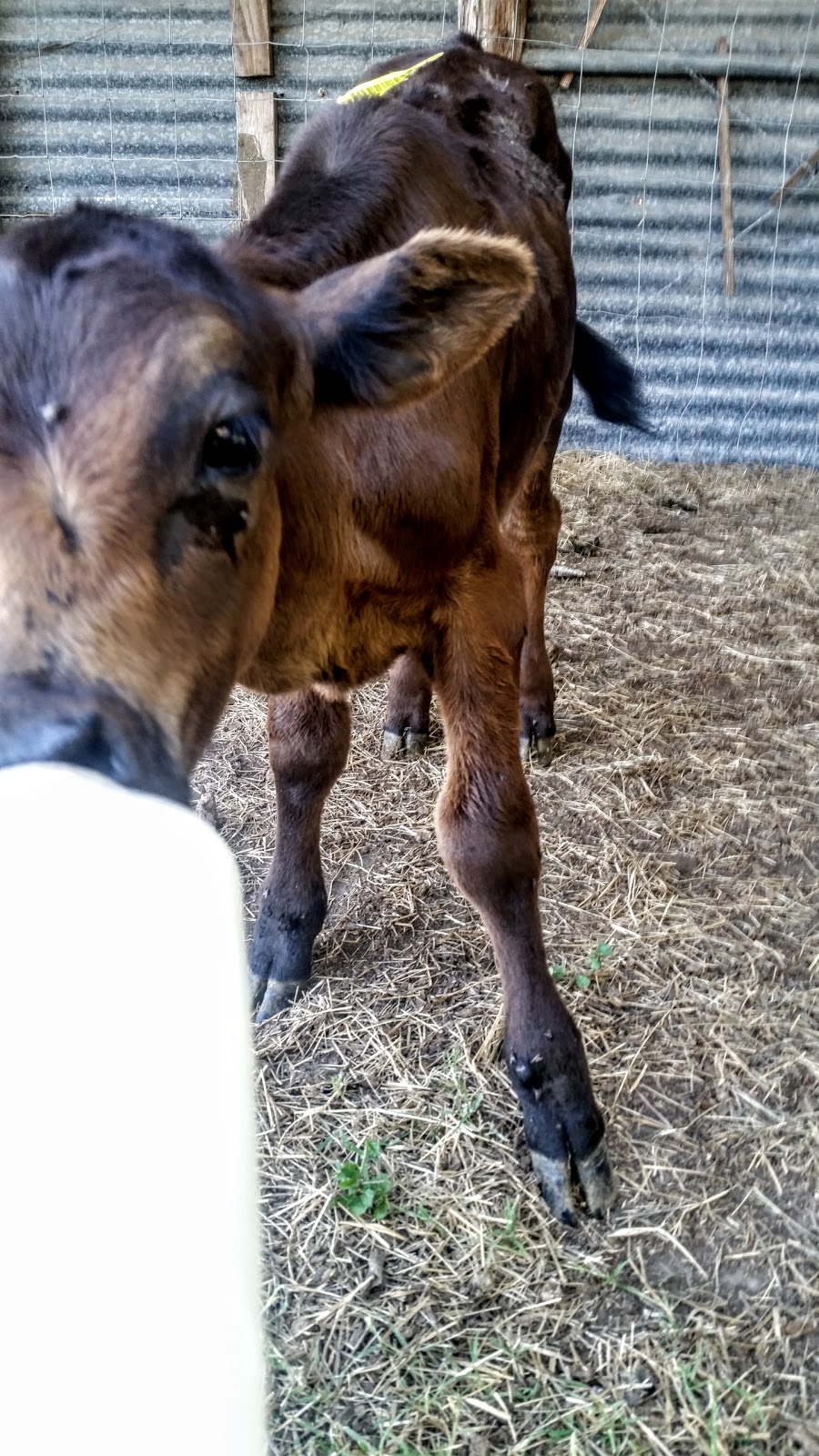
New Angus Cross Calf


Purchased a new little Angus Cross calf from the sales barn last Monday. She has been here for a week and doing great, didn't like the bottle much at first but she as came around.

Not the hardest the calf I placed on a bottle, she did want to suck form the bottle once I finally got it in her mouth. The toughest part was catching and holding her in place. By the end of the first week, she was running up to me get to the bottle.

Really nice to get off to good start with calf.